
Turn abandoned patents
into your own filing
into your own filing
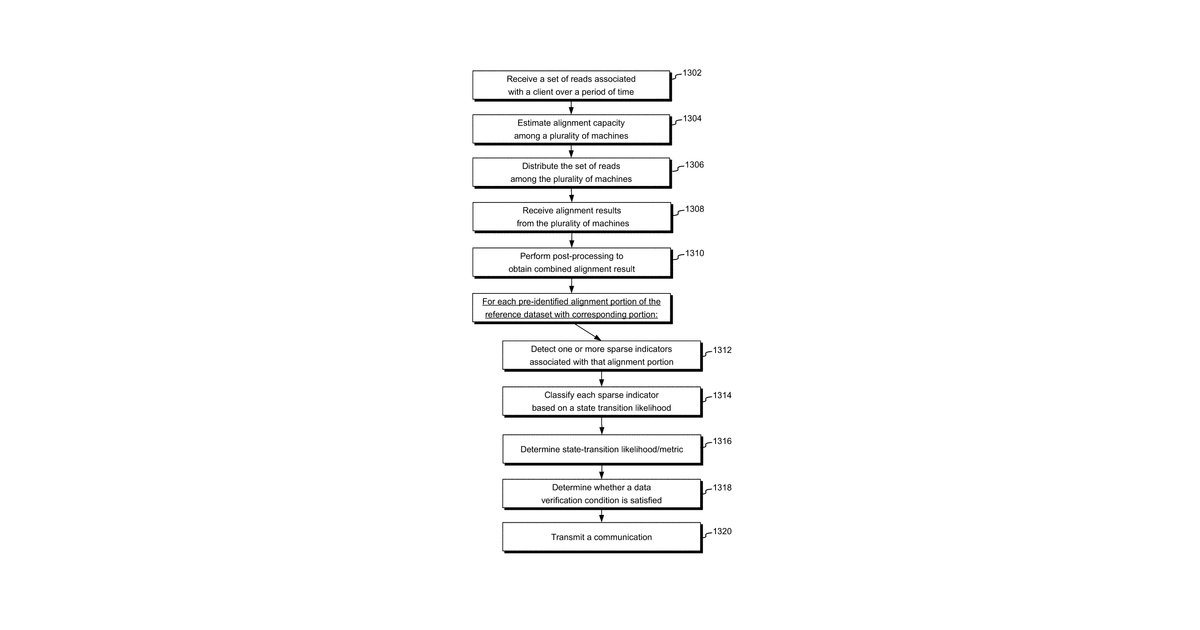
This invention describes a computer system designed to efficiently process large amounts of genetic data by comparing individual genetic 'reads' against a known reference dataset. It achieves this by breaking down the complex comparison tasks and distributing them across multiple computers, intelligently balancing the workload to ensure efficient use of resources. The claims specifically detail identifying alignment scores above a certain threshold and using a 'representation metric' for further analysis, likely for detecting genetic variations.
Why it matters: The dramatic increase in genomic data volume since 2017, coupled with significant advancements in cloud computing and distributed processing technologies, makes efficient, scalable bioinformatics systems like this more critical and easier to implement. Machine learning for workload prediction has also matured.
AI gives you a few directions you could take this. Pick one, and we check whether your version is different enough to patent, then write the filing.
Reinvent this with AI


