
Turn abandoned patents
into your own filing
into your own filing
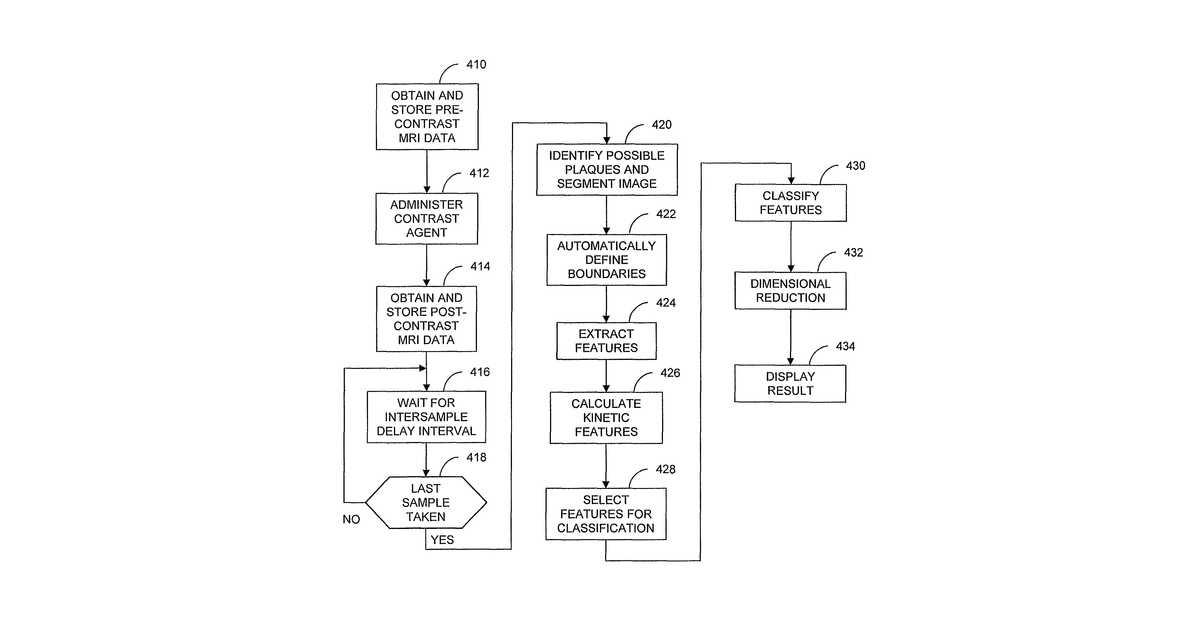
This invention describes a method for automatically identifying potentially dangerous areas in the body, like vulnerable plaques, using a series of MRI scans taken over time. It works by analyzing how contrast dye moves through specific regions in the images, extracting unique patterns from this movement, and then using those patterns to classify the regions as either stable or vulnerable. The claims specifically focus on processing dynamic contrast-enhanced (DCE) MRI images to classify individual image elements (voxels).
Why it matters: Filed before the widespread adoption of deep learning, this invention's classification step could now leverage significantly more powerful AI models for improved accuracy and automated feature extraction. Advances in computational power and specialized hardware since 2013 also make processing large sets of medical images much more efficient.
AI gives you a few directions you could take this. Pick one, and we check whether your version is different enough to patent, then write the filing.
Reinvent this with AI


