
Turn abandoned patents
into your own filing
into your own filing
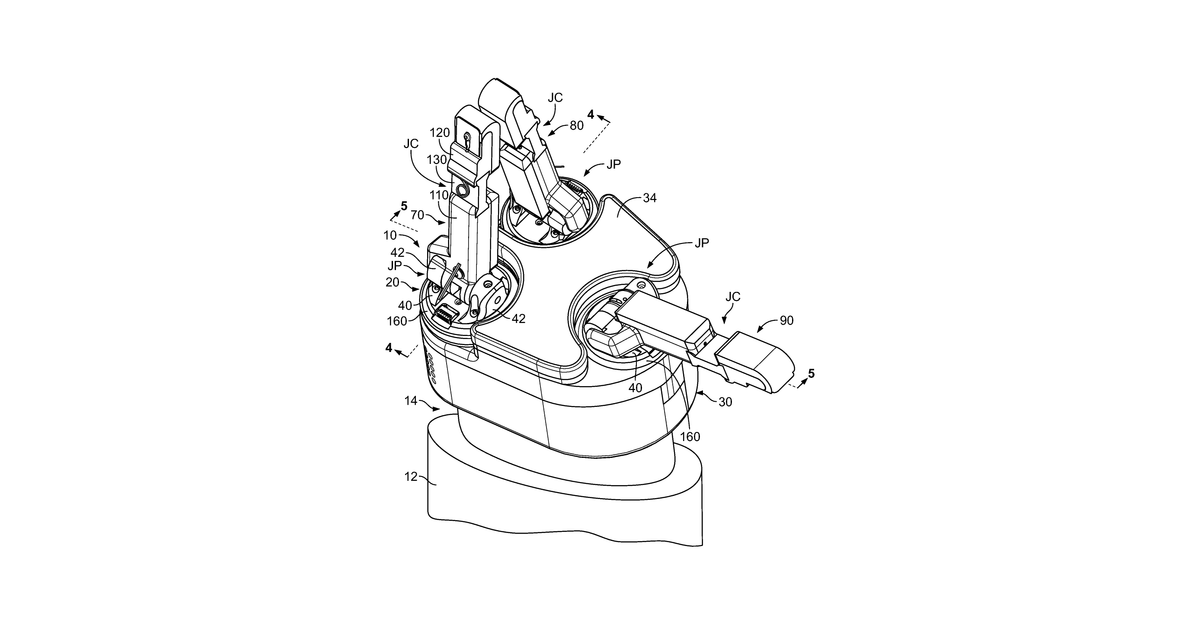
This invention describes a robotic gripper with multiple fingers, each featuring two segments (phalanges) connected by special "flexure joints." These joints are engineered to bend easily in one direction but be much stiffer in another, allowing the gripper to adapt to objects using fewer motors than joints. The tip of each finger includes a rounded end and a very thin lifting edge, specified to be between 0.02 and 0.03 inches thick, which can also define a lifting groove.
Why it matters: In 2013, manufacturing complex flexure joints with specific compliance and integrated features was costly. Advances in additive manufacturing and multi-material 3D printing now make producing such intricate, compliant mechanisms more accessible and cost-effective.
AI gives you a few directions you could take this. Pick one, and we check whether your version is different enough to patent, then write the filing.
Reinvent this with AI


