
Turn abandoned patents
into your own filing
into your own filing
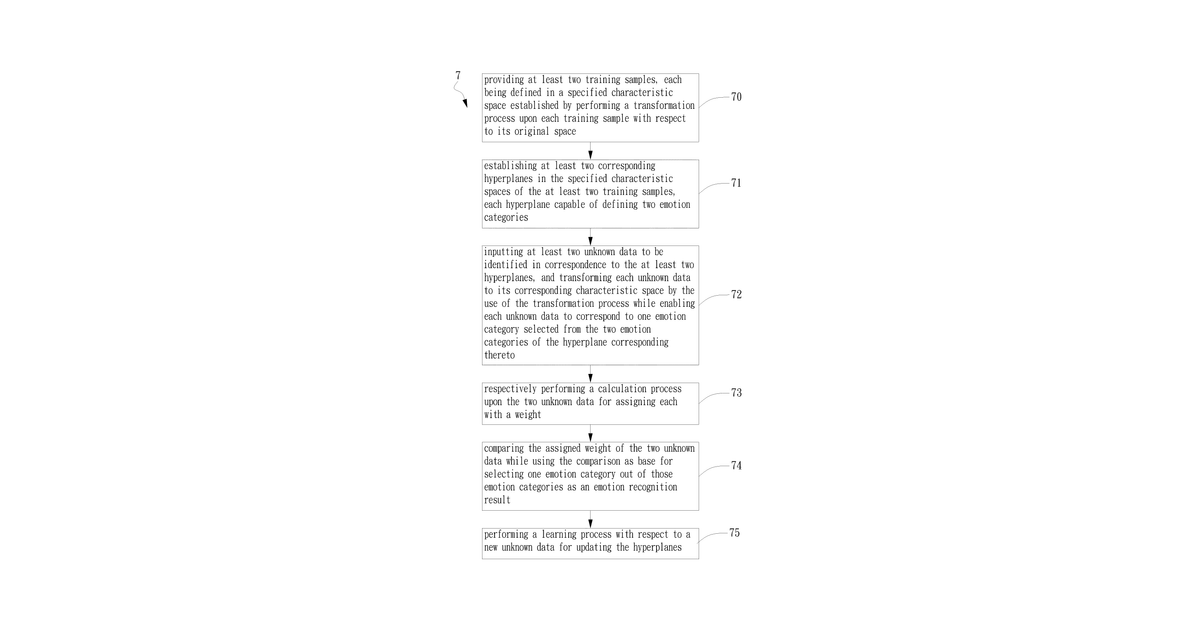
This invention describes a method for recognizing human emotions like happiness, sadness, or anger by analyzing both a person's image and their voice. It uses a computer model called a support vector machine (SVM) to learn from examples. When trying to identify an unknown emotion, the system gives more weight to the information (image or audio) it trusts more, based on how clearly it classifies that data, and then uses that to correct the other information, improving overall accuracy.
Why it matters: Filed before the widespread adoption of deep learning, which has vastly improved multimodal data processing and emotion recognition accuracy. Modern computational power and larger datasets make training and deploying such a system significantly more efficient and effective than in 2011.
AI gives you a few directions you could take this. Pick one, and we check whether your version is different enough to patent, then write the filing.
Reinvent this with AI


