
Turn abandoned patents
into your own filing
into your own filing
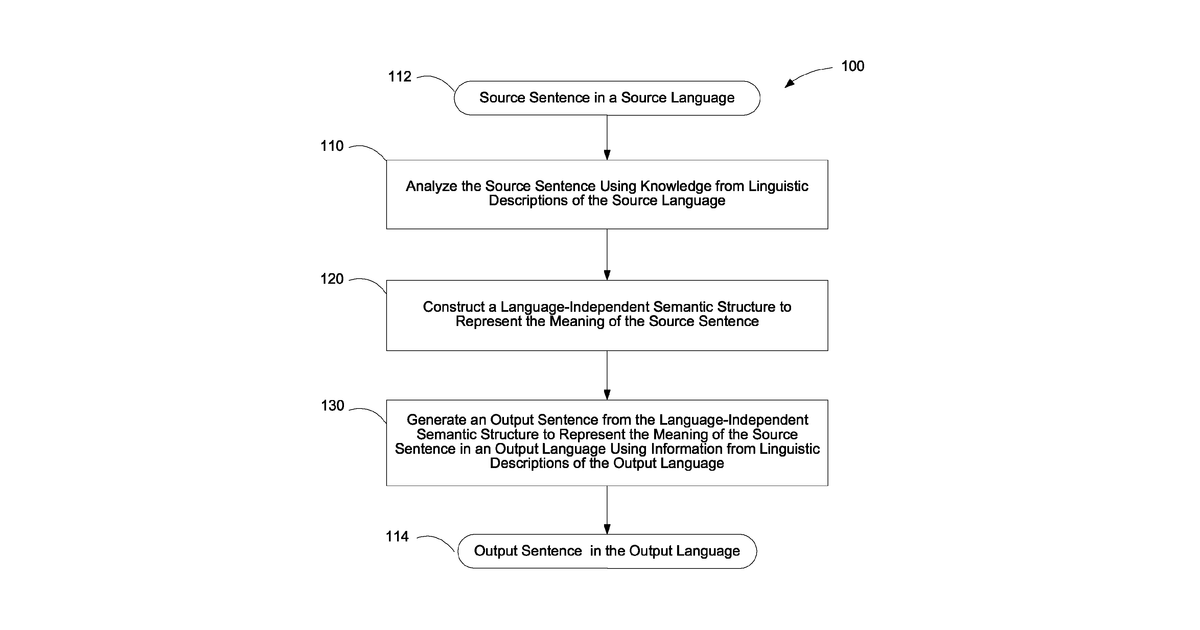
This invention describes a computer system that translates sentences by first understanding their core meaning, independent of any specific language. It converts an input sentence into a universal meaning representation, then uses that representation to build a new sentence in the target language. The claims specifically detail how the system constructs the new sentence from this universal meaning, including arranging words and applying grammar rules.
Why it matters: Filed before large language models (LLMs) and neural machine translation became prevalent. LLMs can now implicitly learn and leverage language-independent semantic representations, making the synthesis steps described in the claims much more feasible and performant than with 2007 technology.
AI gives you a few directions you could take this. Pick one, and we check whether your version is different enough to patent, then write the filing.
Reinvent this with AI


