
Turn abandoned patents
into your own filing
into your own filing
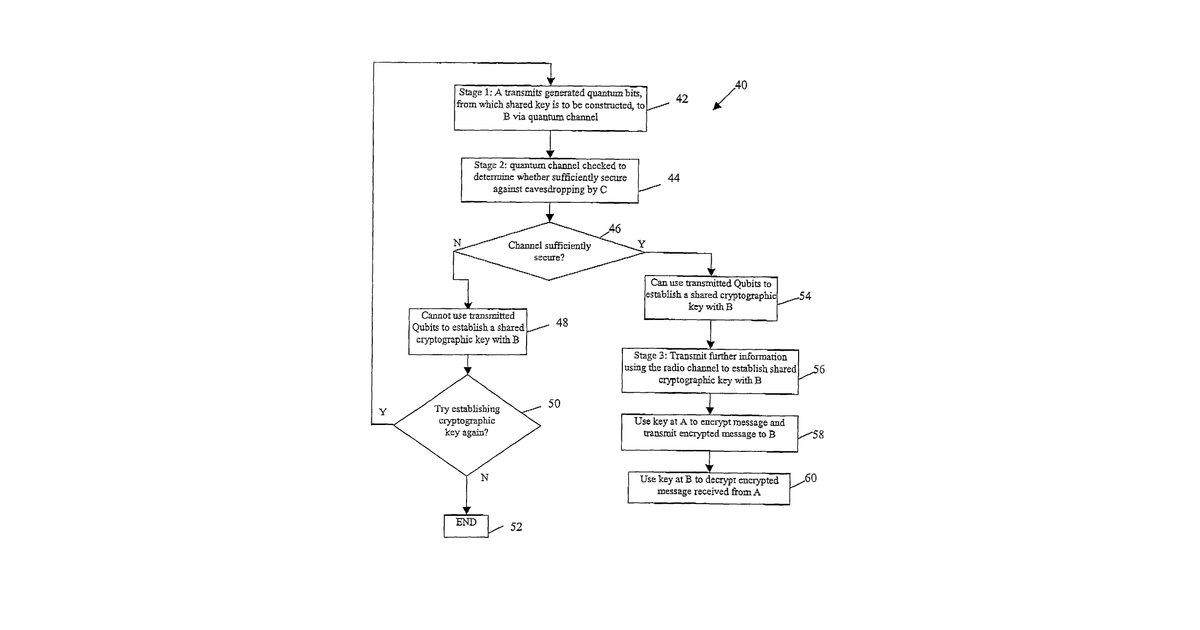
This invention describes a way for two people to create a secret, shared encryption key using quantum physics. One person sends a series of quantum particles, each prepared in a random quantum state. The other person measures these particles, also using random settings. By comparing a small sample of their choices and results, they can detect if anyone has eavesdropped. If the channel is secure, they then use the remaining quantum particles to generate their secret key, which is then refined to ensure it's identical and truly secret.
Why it matters: Filed in 2003, this patent predates the significant advancements in practical quantum key distribution (QKD) systems and the growing urgency for post-quantum cryptography. The necessary quantum hardware and control systems, once largely theoretical, are now much closer to commercial viability, making the underlying method more feasible to implement.
AI gives you a few directions you could take this. Pick one, and we check whether your version is different enough to patent, then write the filing.
Reinvent this with AI


