
Turn abandoned patents
into your own filing
into your own filing
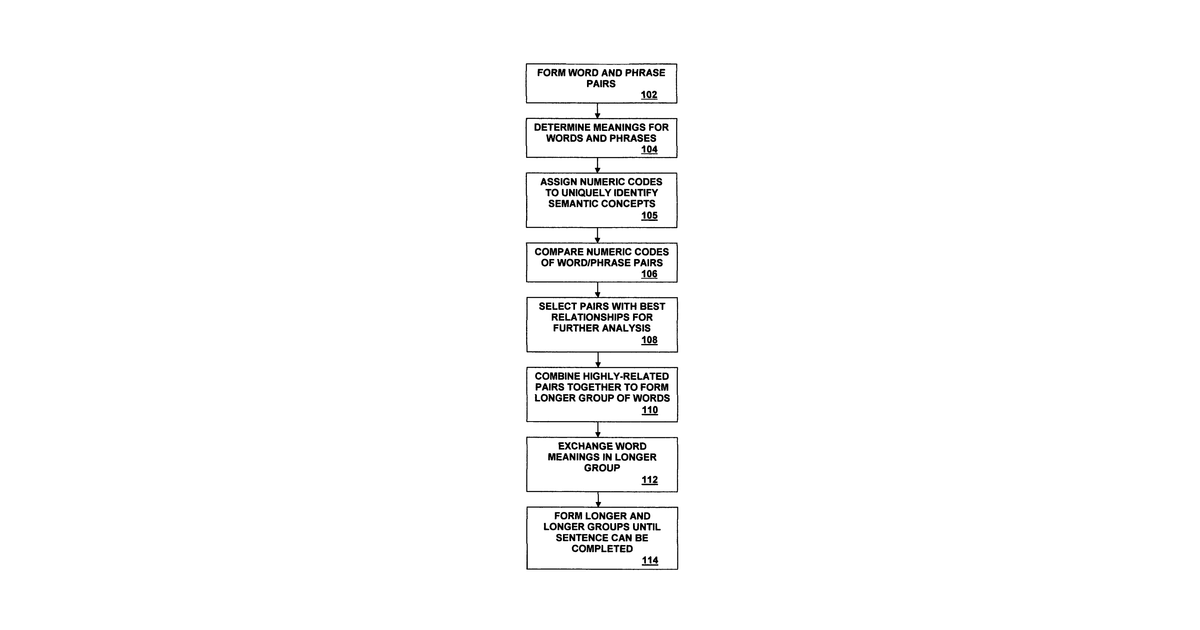
This invention describes a way for computers to understand natural language, like sentences we speak or write, without being limited to a specific topic. It works by breaking down a sentence into pairs of words or phrases, figuring out their meanings, and assigning unique numerical codes to those meanings. The system then compares these codes to find the strongest connections between words, gradually building up an understanding of longer and longer parts of the sentence until it grasps the full meaning. Notably, the first claim specifies this pairing happens within 'independent phrases' of a sentence.
Why it matters: Filed in 2004, this method predates the rise of large language models (LLMs) which now perform semantic disambiguation and natural language understanding with unprecedented sophistication. While the core problem remains, modern AI techniques have largely superseded the explicit, step-by-step semantic coding and comparison described here.
AI gives you a few directions you could take this. Pick one, and we check whether your version is different enough to patent, then write the filing.
Reinvent this with AI


