
Turn abandoned patents
into your own filing
into your own filing
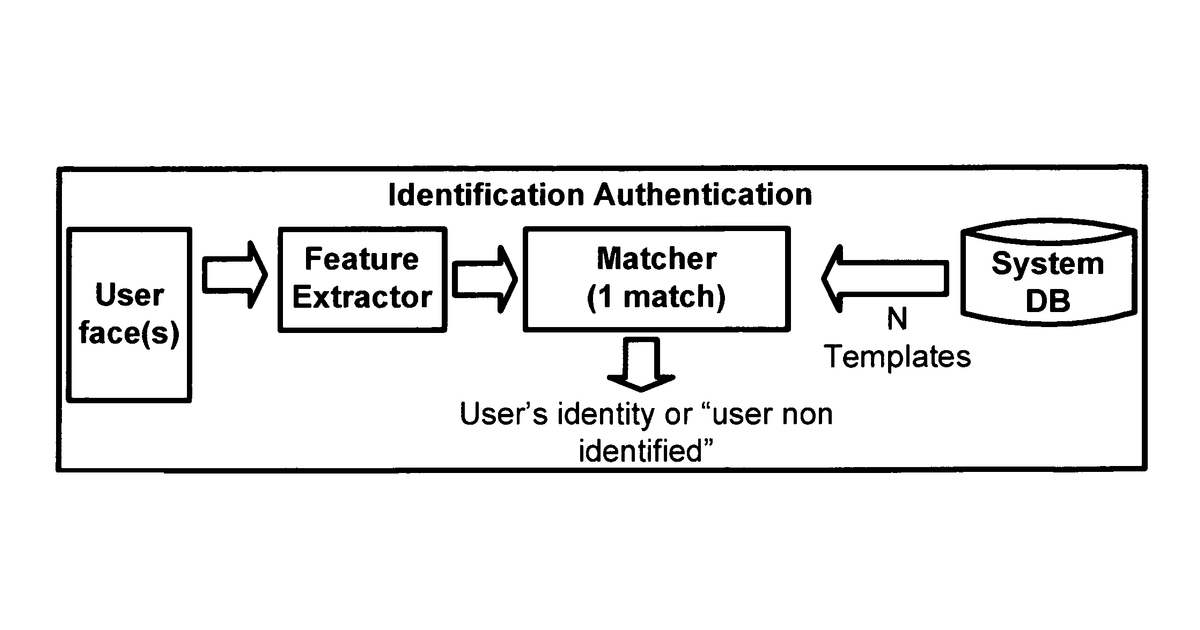
This invention describes a system designed to recognize known identities while also identifying and rejecting anything it hasn't been specifically trained on, labeling it as "unknown." It works by capturing a sample, extracting unique features using a pre-trained model, and comparing these to a gallery of known identities. A key part is a unique method for determining if a sample is truly unknown: it calculates a "credibility" score and a "peak-to-side ratio" for the sample, and if this ratio falls below a learned threshold, the system rejects it as unknown.
Why it matters: Filed before the widespread adoption of deep learning and powerful GPUs, the specific algorithmic approach for open-set rejection using credibility and peak-to-side ratios could be re-evaluated and optimized with modern machine learning frameworks and vastly improved computational resources. The underlying problem of robust open-set recognition remains critical and has seen significant advancements in the past two decades.
AI gives you a few directions you could take this. Pick one, and we check whether your version is different enough to patent, then write the filing.
Reinvent this with AI


