
Turn abandoned patents
into your own filing
into your own filing
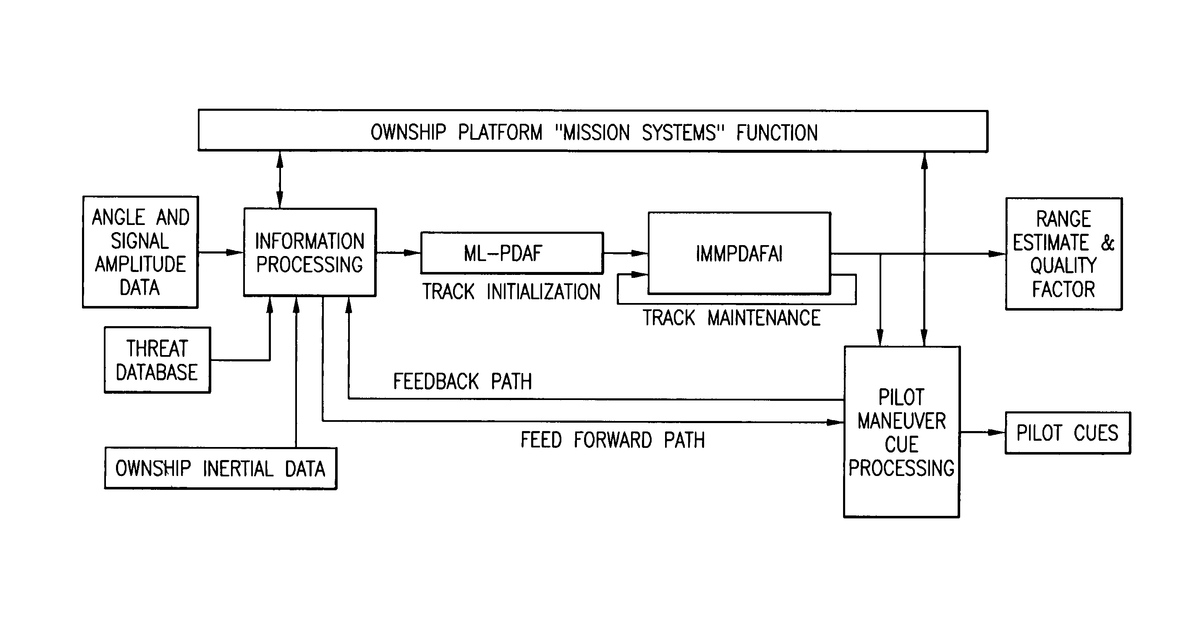
This invention helps a fighter jet secretly find and follow enemy aircraft without giving away its own position. It uses the jet's existing radio sensors to listen for signals from other planes and then applies complex mathematical methods to figure out how far away and where the enemy is, even if they are moving. The claims narrow this to specifically using a two-stage process called ML-PDAF for initial detection and IMM for continuous tracking, and in one version, only using azimuth measurements from the jet's passive RF sensor combined with specific flight maneuvers.
Why it matters: The computational demands of batch-based maximum likelihood probabilistic data association and interacting multiple model estimators were significant in 2004. Modern embedded processors and specialized hardware now offer the necessary real-time processing power to implement these complex algorithms more efficiently and accurately within a fighter jet's avionics.
AI gives you a few directions you could take this. Pick one, and we check whether your version is different enough to patent, then write the filing.
Reinvent this with AI


