
Turn abandoned patents
into your own filing
into your own filing
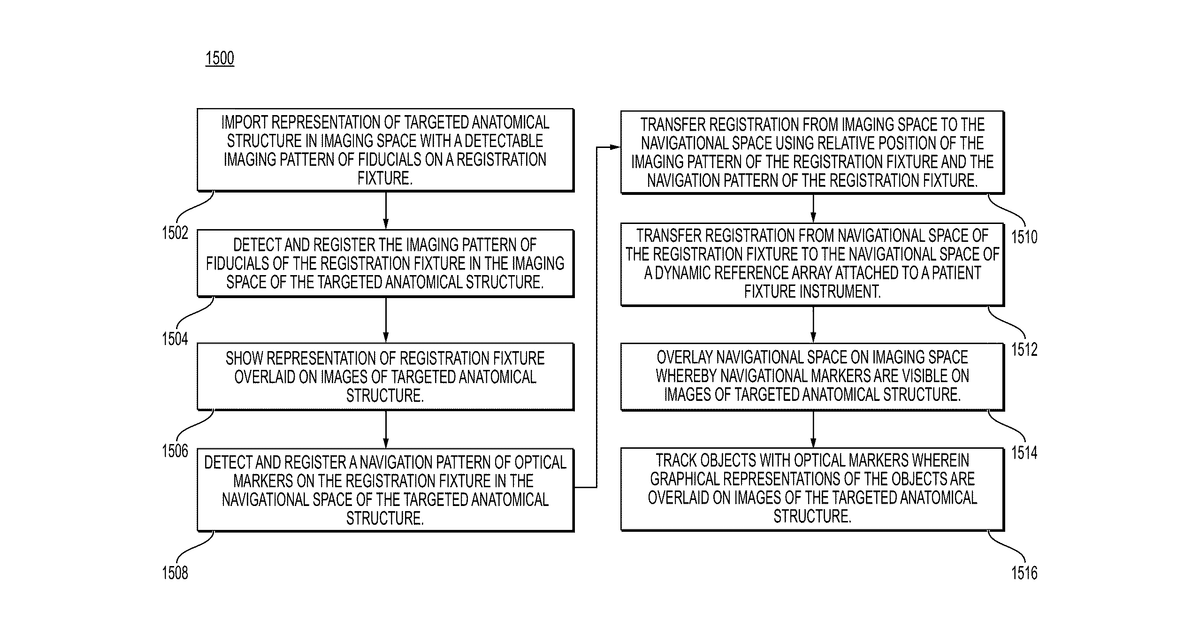
This invention helps surgeons use a pre-existing 3D scan of a patient for navigation without needing another full 3D scan during an operation. It works by taking 2D images during surgery and matching them to corresponding views generated from the initial 3D scan. A computer aligns everything by simultaneously tracking markers placed on the imaging device and on the patient's body. The claims specifically describe a system using a portable imaging system, a patient-attached dynamic reference base, and a tracking device for this purpose.
Why it matters: The core challenge of matching 2D images to a 3D volume, as described in the claims, relies heavily on computational algorithms. Since 2023, advancements in AI-driven image registration and pose estimation algorithms have likely improved the speed and accuracy of such complex matching tasks, potentially making the system's performance more robust and clinically viable.
AI gives you a few directions you could take this. Pick one, and we check whether your version is different enough to patent, then write the filing.
Reinvent this with AI


