
Turn abandoned patents
into your own filing
into your own filing
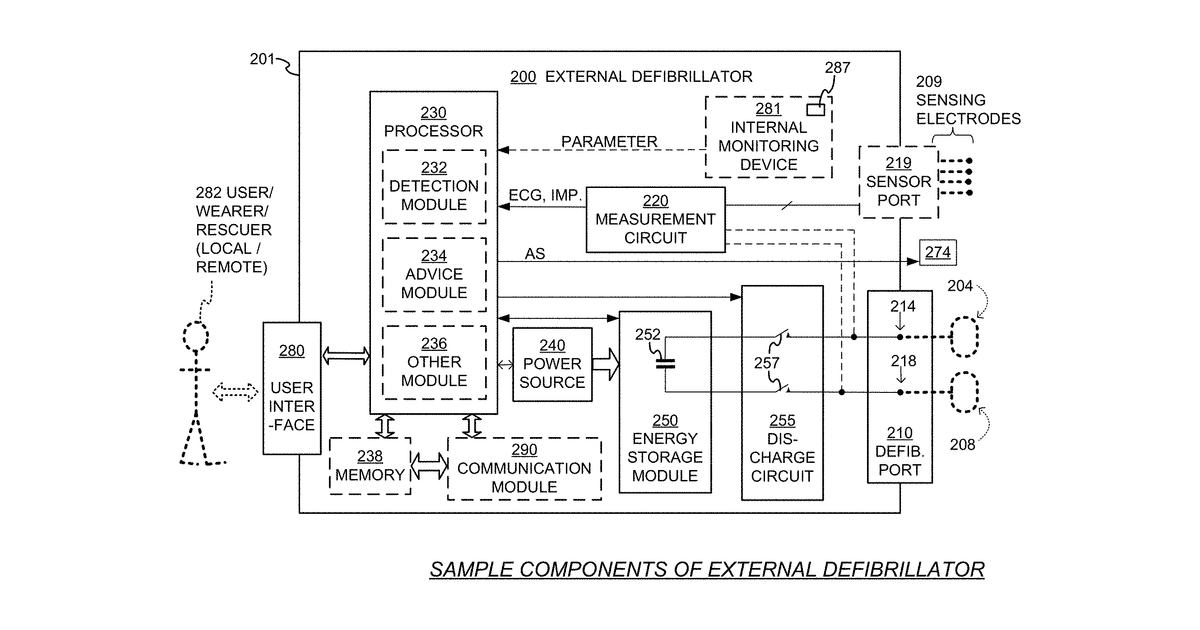
This invention describes a wearable defibrillator that monitors a patient's heart rhythm and can deliver an electric shock if needed. A key feature is its ability to detect when the heart signal is too noisy due to patient movement or other interference. If excessive noise is detected, the device will delay any potential shock or alarm until the noise subsides or a set time passes, preventing false alarms.
Why it matters: Recent advancements in machine learning for signal processing have significantly improved the ability to accurately identify and filter high-amplitude noise from ECG readings. This could make the WCD's noise detection and delay mechanism more precise and reliable than when it was filed.
AI gives you a few directions you could take this. Pick one, and we check whether your version is different enough to patent, then write the filing.
Reinvent this with AI


