
Turn abandoned patents
into your own filing
into your own filing
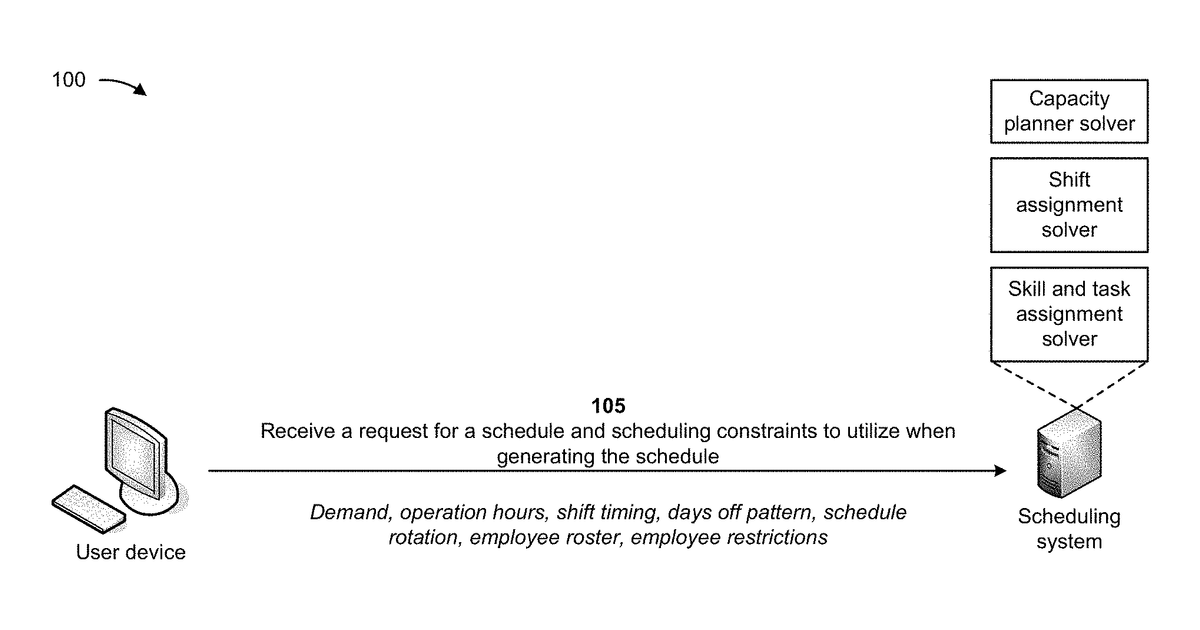
This invention describes an automated system for creating workforce schedules. It works by breaking down the scheduling problem into three sequential steps, each handled by a specialized mathematical optimization program. First, it figures out overall staff capacity, then assigns shifts, and finally matches specific skills and tasks to employees, all while considering various rules like demand, working hours, and employee availability. The claims specify that these optimization programs can be constraint programming models.
Why it matters: Filed before the widespread adoption of advanced AI, particularly large language models, which could now simplify the interpretation of complex scheduling constraints and requests, making the system easier to configure and adapt.
AI gives you a few directions you could take this. Pick one, and we check whether your version is different enough to patent, then write the filing.
Reinvent this with AI


