
Turn abandoned patents
into your own filing
into your own filing
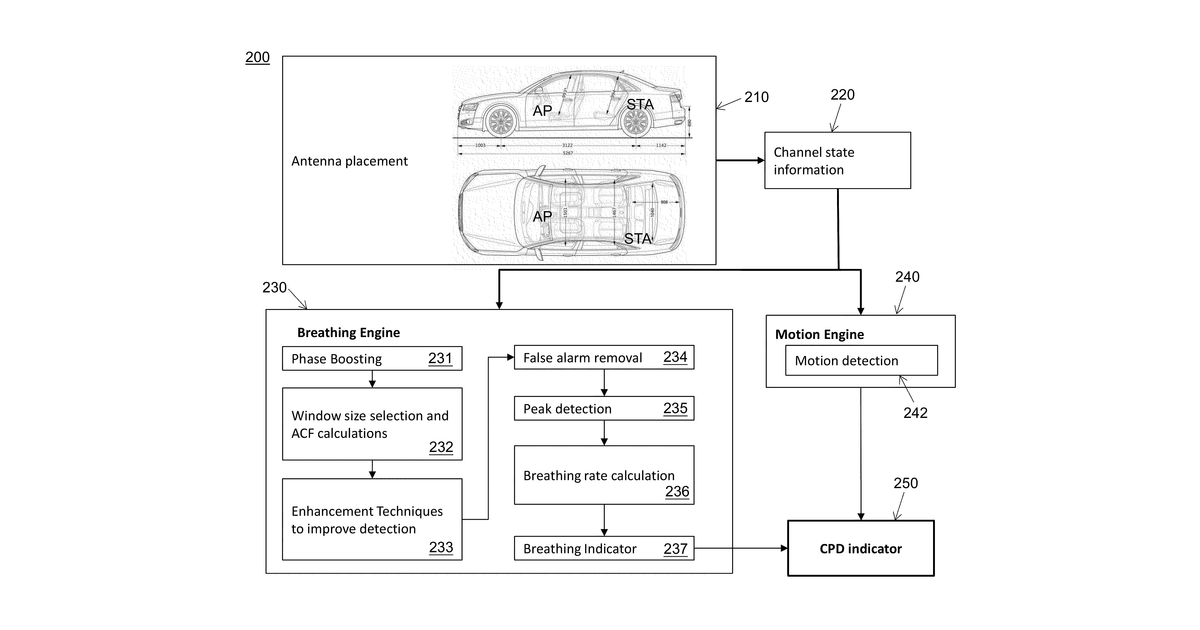
This invention describes a system that monitors a person's vital signs, like breathing or heart rate, without physical contact. It operates by transmitting a wireless signal into a room and then receiving it, noting how the signal changes due to subtle movements from a person's vital signs. A processor then analyzes these signal changes using a specific method: it computes a time series of "CI-features" (which combine basic signal characteristics with denoised versions), then uses sliding time windows and one-dimensional characteristic functions to create a two-dimensional decomposition for monitoring.
Why it matters: Filed before the latest advancements in machine learning for signal processing. The complex 2D decomposition and enhancement steps could now be more efficiently implemented using modern AI frameworks and more powerful edge computing.
AI gives you a few directions you could take this. Pick one, and we check whether your version is different enough to patent, then write the filing.
Reinvent this with AI


