
Turn abandoned patents
into your own filing
into your own filing
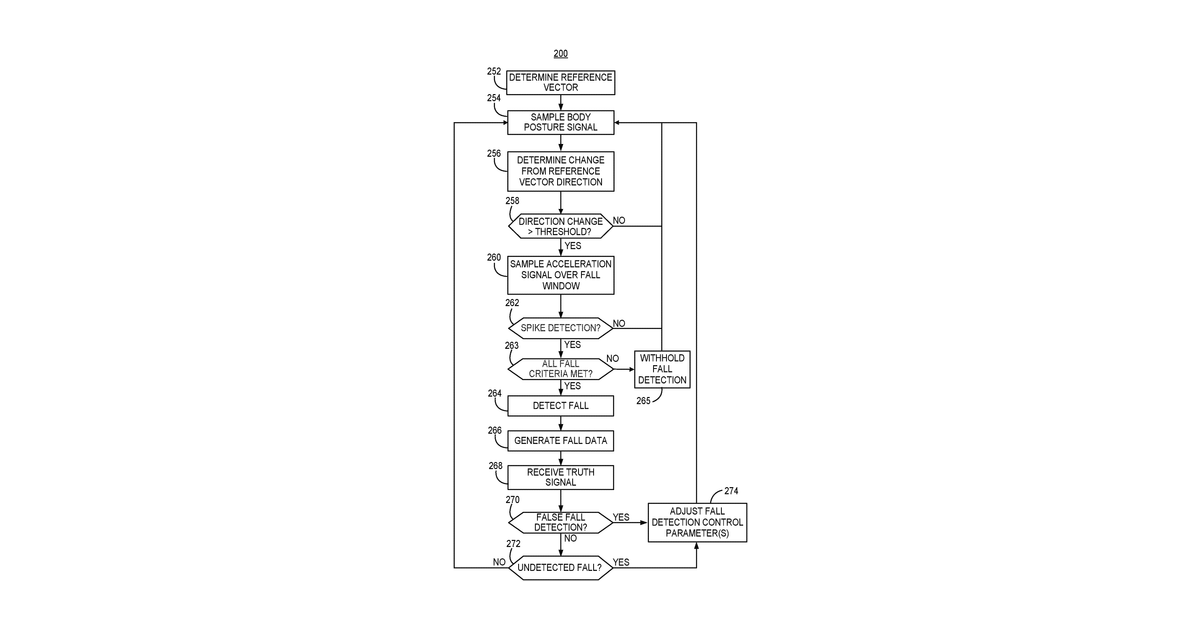
This medical device uses an accelerometer to measure a person's movement. It processes these measurements to create two distinct signals: one representing body posture and another for body acceleration. A fall is detected when these two signals meet specific criteria, which can involve different sampling rates or filter frequencies for each signal. The device can also learn from its mistakes; if an external signal indicates a false fall detection, it automatically adjusts its internal settings to improve future accuracy.
Why it matters: Filed before widespread adoption of efficient on-device adaptive algorithms for sensor data. The ability to process and adapt parameters on-device has significantly improved since 2022.
AI gives you a few directions you could take this. Pick one, and we check whether your version is different enough to patent, then write the filing.
Reinvent this with AI


