
Turn abandoned patents
into your own filing
into your own filing
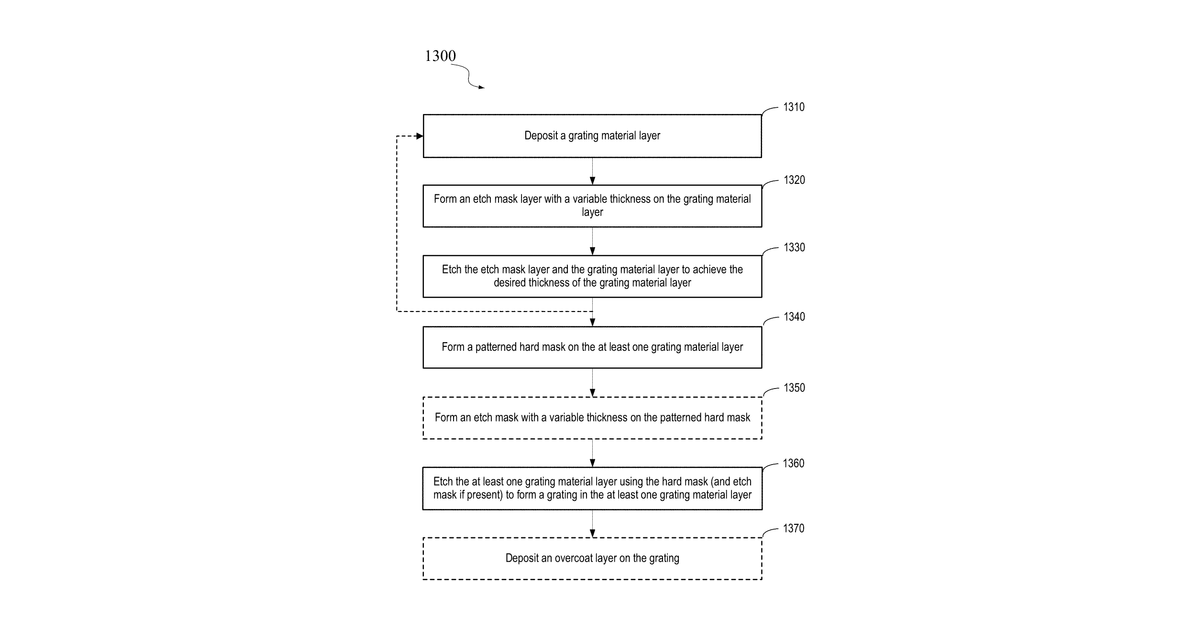
This invention describes a method for creating optical gratings where the depth of the tiny ridges varies across the grating's surface. It uses a specialized lithography technique, often called gray-tone lithography, to first create a temporary mask with a precisely controlled, varying thickness. This temporary mask then guides subsequent etching steps to sculpt the final grating material into the desired variable-depth pattern.
Why it matters: The classifications point to head-up and head-mounted displays, an area of rapid optical innovation since 2020. Advances in gray-tone lithography materials or exposure systems could now make these complex variable-depth gratings more practical for next-generation devices.
AI gives you a few directions you could take this. Pick one, and we check whether your version is different enough to patent, then write the filing.
Reinvent this with AI


