
Turn abandoned patents
into your own filing
into your own filing
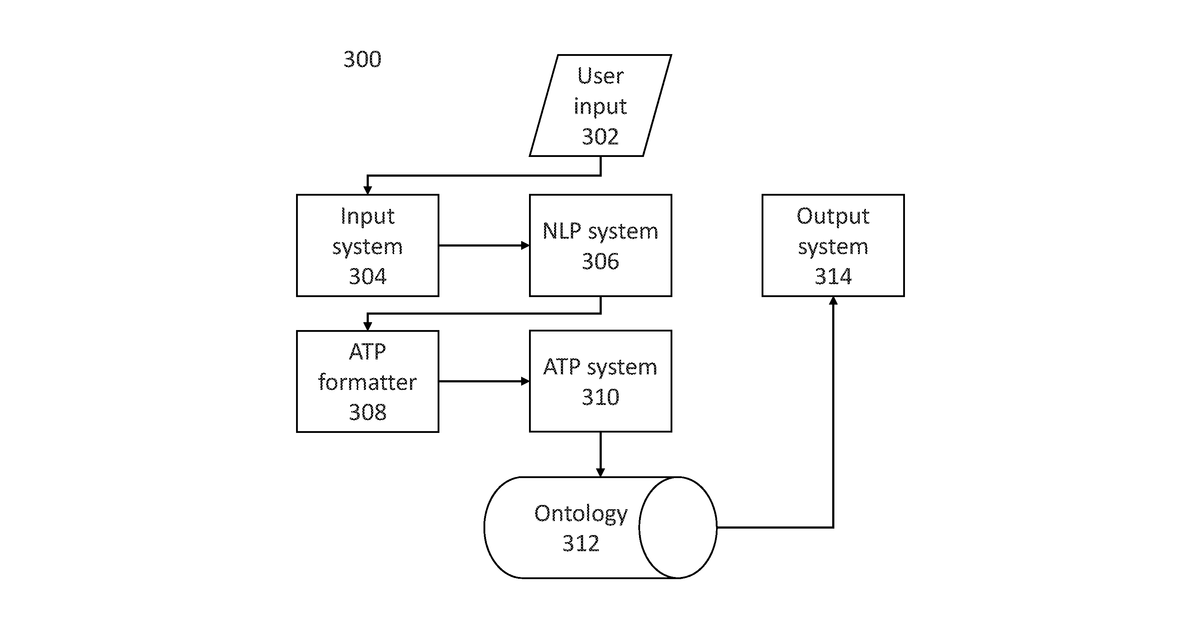
This invention describes an artificial intelligence system that processes various types of input, like text messages or spoken words, to understand what they mean and respond to users. It works by translating natural language into a structured format that a specialized reasoning engine, called an automated theorem prover, can use. This engine then builds a knowledge base from the processed information, allowing the system to answer user questions by mapping them to this understanding. Specifically, it processes text, converts it into a graph-like structure representing phrases and their parts, and then transforms this into logical rules or theorems by identifying action words or concepts.
Why it matters: Filed before large language models (LLMs) were widely capable of advanced natural language understanding and knowledge extraction. Modern LLMs could significantly simplify the NLP, ontology population, and semantic analysis aspects, making the core comprehension and response generation more feasible than in 2019.
AI gives you a few directions you could take this. Pick one, and we check whether your version is different enough to patent, then write the filing.
Reinvent this with AI


