Turn abandoned patents
into your own filing
into your own filing
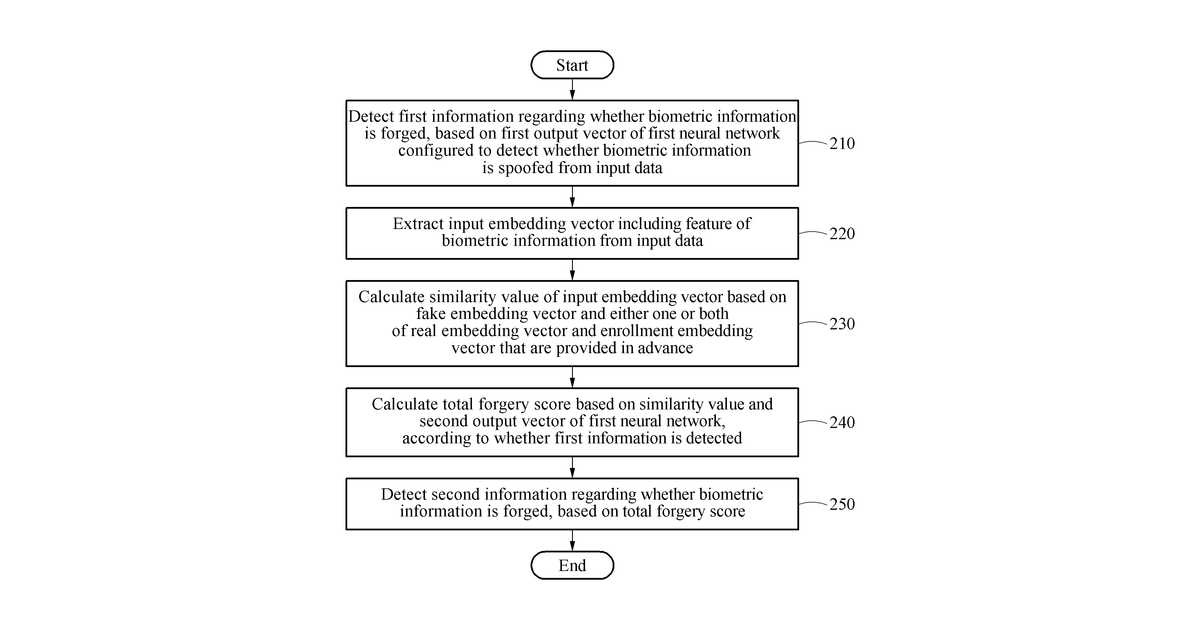
This invention describes a method to determine if biometric information, such as a fingerprint or face scan, is real or forged. It uses a neural network to first get an initial indication of forgery, specifically by checking if an intermediate score falls within a certain range. Then, it extracts unique features from the biometric data and compares them to pre-existing real and fake examples. These two pieces of information are combined into a final score to decide if the biometric data is forged, with the calculation varying based on the initial indication.
Why it matters: Since 2022, the capabilities of neural networks for detecting subtle anomalies in biometric data have advanced significantly, driven by improved architectures and larger training datasets. This could make the multi-stage detection and scoring method described more robust and accurate to implement now.
AI gives you a few directions you could take this. Pick one, and we check whether your version is different enough to patent, then write the filing.
Reinvent this with AI


