
Turn abandoned patents
into your own filing
into your own filing
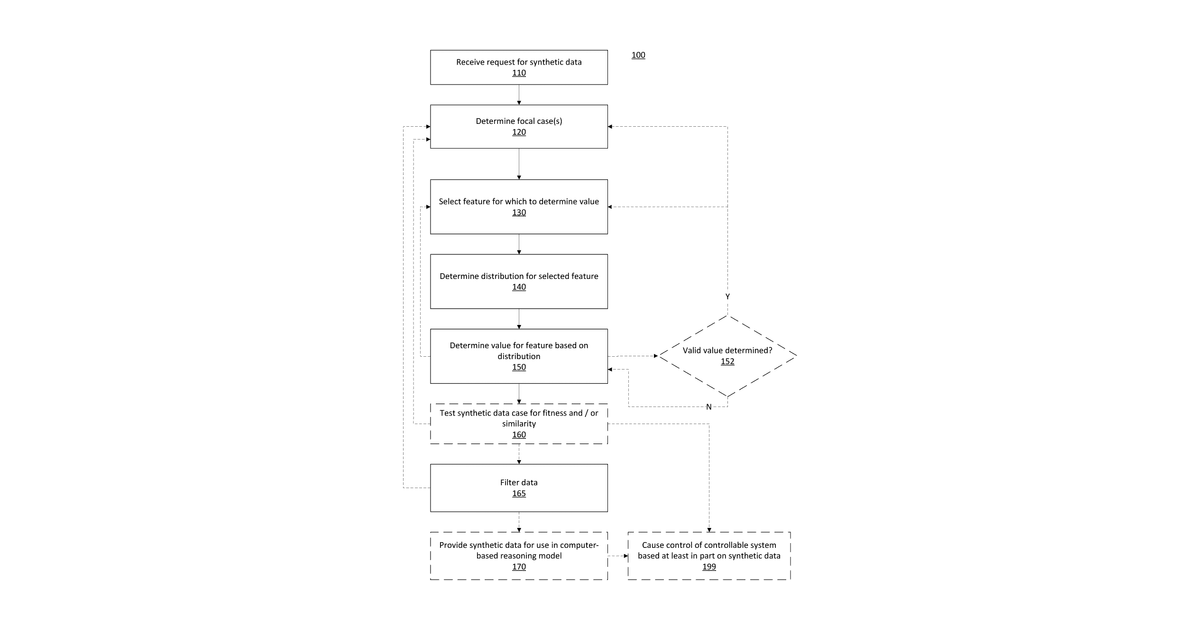
This invention describes a method for creating artificial data that looks and behaves like real data, which is useful for training computer systems. It works by first setting specific rules or conditions for the new data. Then, for each piece of artificial data it generates, it finds similar real data examples (called "focal cases") to help decide what values to fill in for the unknown parts, ensuring the new data is realistic and follows the rules. The claims specifically focus on using values already determined within the artificial data itself (like a previous step or an already-filled field) to guide the generation of subsequent values.
Why it matters: Filed before the widespread adoption of highly capable generative AI models, the tools for building such a conditioned synthetic data system are now significantly more powerful and accessible. Modern generative networks excel at creating data based on specific conditions and patterns derived from existing examples, making this approach more feasible and impactful.
AI gives you a few directions you could take this. Pick one, and we check whether your version is different enough to patent, then write the filing.
Reinvent this with AI


