
Turn abandoned patents
into your own filing
into your own filing
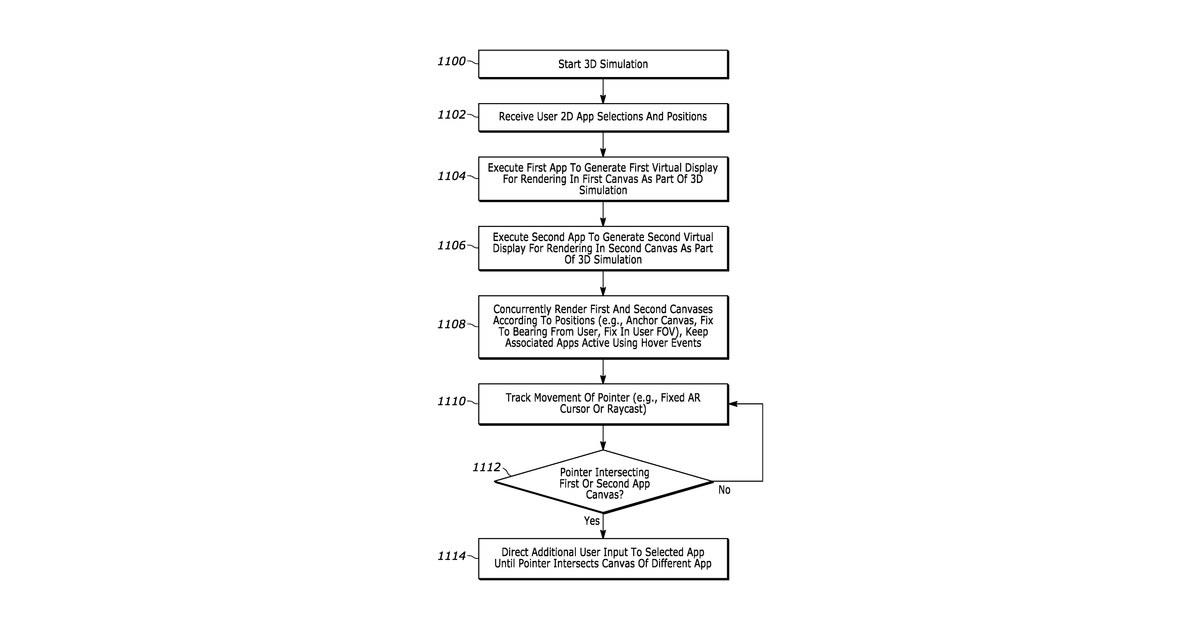
A device runs multiple separate programs, each creating its own virtual screen. These virtual screens are then shown at the same time within a 3D simulated environment, such as in a virtual reality headset. The user can place these virtual screens wherever they want in the 3D space, and one can even be locked to a specific real-world spot.
Why it matters: Filed before the widespread availability of consumer spatial computing platforms. The capabilities described, particularly multi-app rendering and persistent spatial anchors, have become significantly more robust and performant on modern VR/AR headsets and operating systems since 2022.
AI gives you a few directions you could take this. Pick one, and we check whether your version is different enough to patent, then write the filing.
Reinvent this with AI


