
Turn abandoned patents
into your own filing
into your own filing
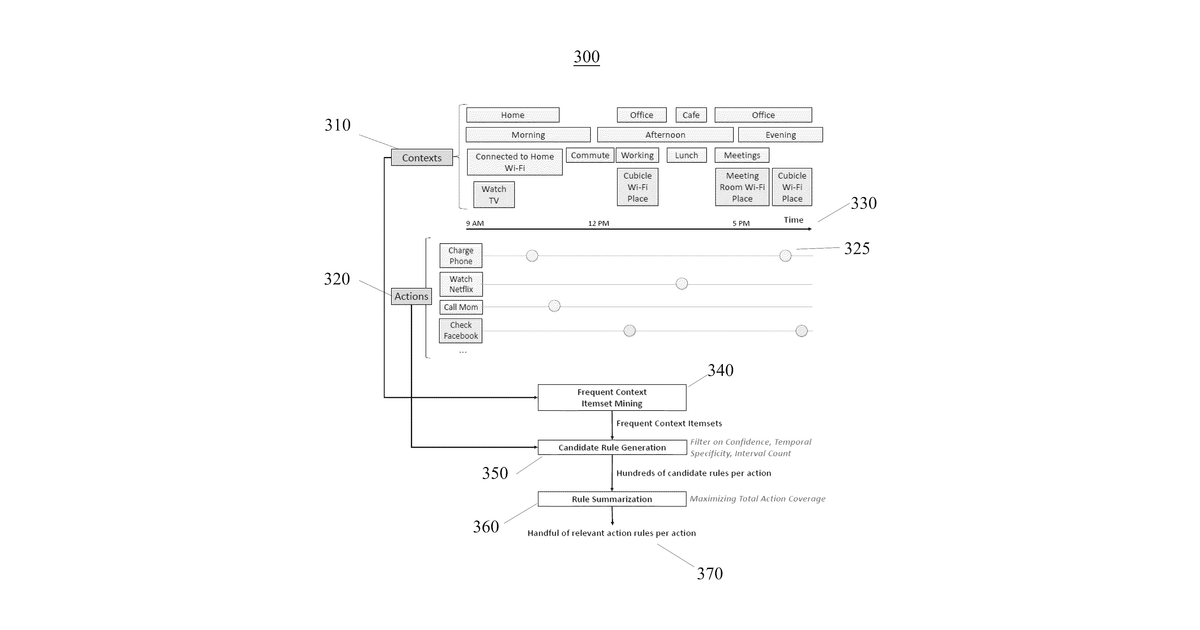
An electronic device learns your habits by analyzing your past actions, including when and where they happened. It identifies patterns and creates rules based on how likely an action is to occur under certain conditions, like specific times or locations. These rules then allow the device to automatically perform those actions for you, using specific thresholds for likelihood and time durations, and location data to define 'semantic places'.
Why it matters: Since 2018, machine learning frameworks and on-device AI capabilities have advanced significantly, making the processing of complex user behavior patterns and contextual data for automation more efficient and accurate.
AI gives you a few directions you could take this. Pick one, and we check whether your version is different enough to patent, then write the filing.
Reinvent this with AI


