
Turn abandoned patents
into your own filing
into your own filing
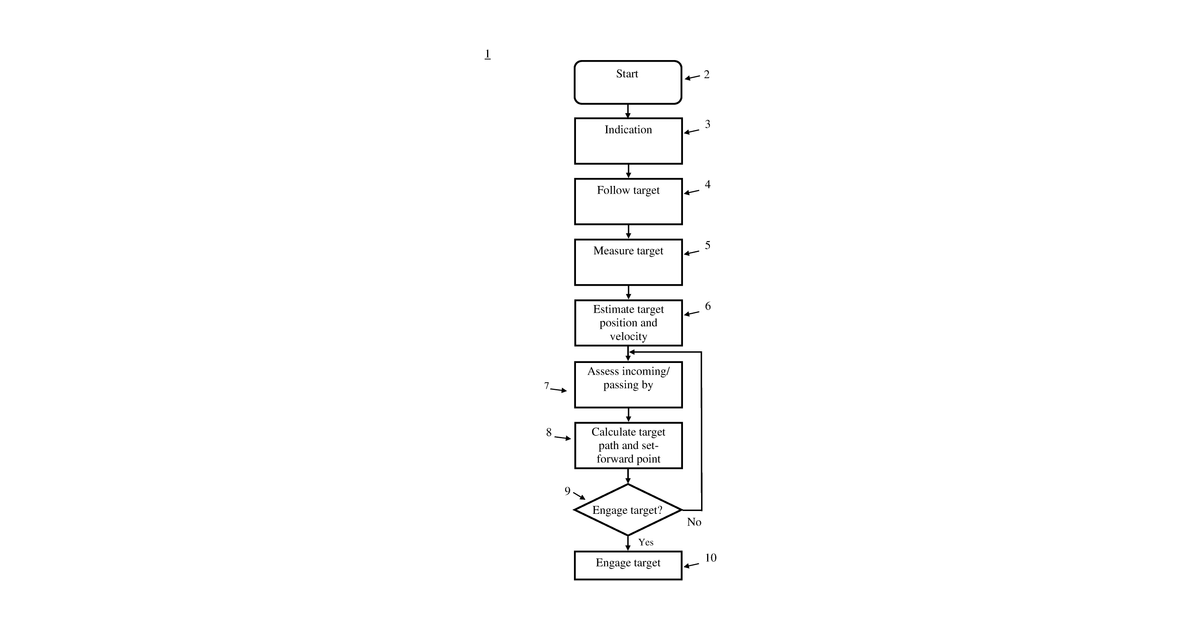
This invention describes a method for aiming an anti-aircraft gun at incoming aerial targets. It works by continuously tracking a target's location, figuring out its speed and where it's headed, and then predicting if it will hit a protected object. The method specifically guides the gun using a calculation that multiplies the target's observed acceleration by the squared predicted time until impact, divided by its distance, and also considers the target's estimated maximum acceleration.
Why it matters: Filed before the widespread maturation of real-time sensor fusion and predictive algorithms on edge computing platforms. These advancements now simplify the complex estimation and guidance calculations required.
AI gives you a few directions you could take this. Pick one, and we check whether your version is different enough to patent, then write the filing.
Reinvent this with AI


