Turn abandoned patents
into your own filing
into your own filing
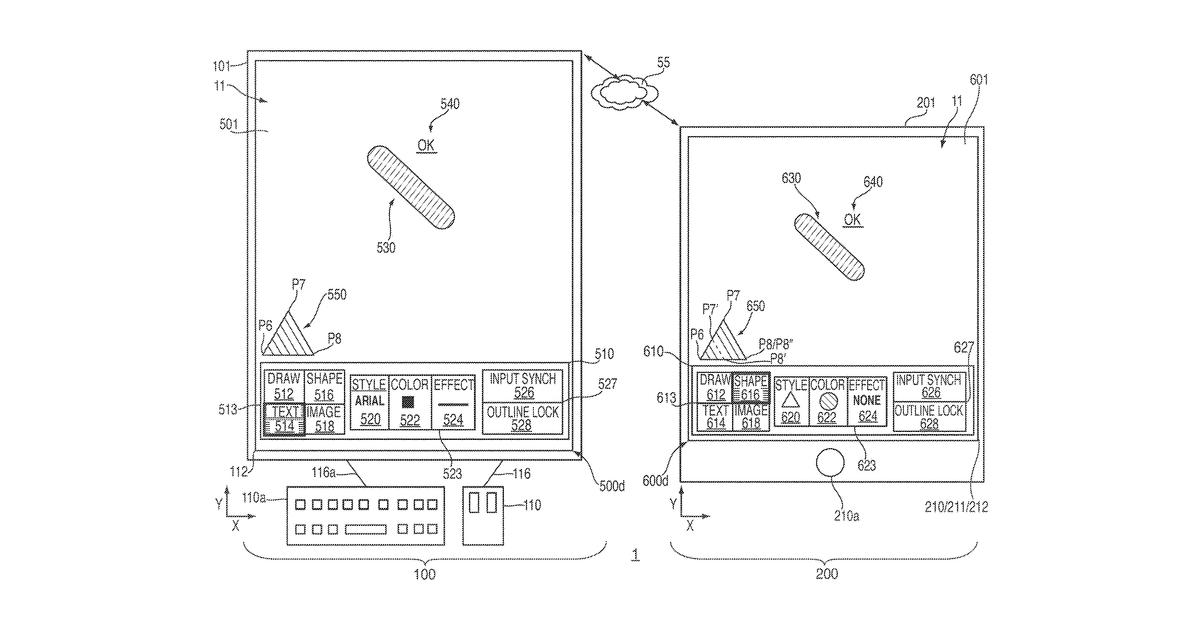
This invention describes a way for multiple people to collaborate on a virtual artwork using their own electronic devices, like tablets or phones. Instead of sending entire images back and forth, which can be slow, the system shares only the specific drawing actions or commands each person makes. This reduces delays, making the collaboration feel more immediate. The claims specifically focus on a touch-sensitive device receiving an instruction to show a user interface from another device already displaying the artwork, allowing the user to draw on it with their finger.
Why it matters: The core technical challenge of reducing latency in real-time collaborative graphical applications remains. Since 2022, the maturation of real-time web technologies and the increasing demand for seamless, low-latency collaborative digital experiences across various platforms make this command-sharing approach more relevant and feasible to implement effectively.
AI gives you a few directions you could take this. Pick one, and we check whether your version is different enough to patent, then write the filing.
Reinvent this with AI


