
Turn abandoned patents
into your own filing
into your own filing
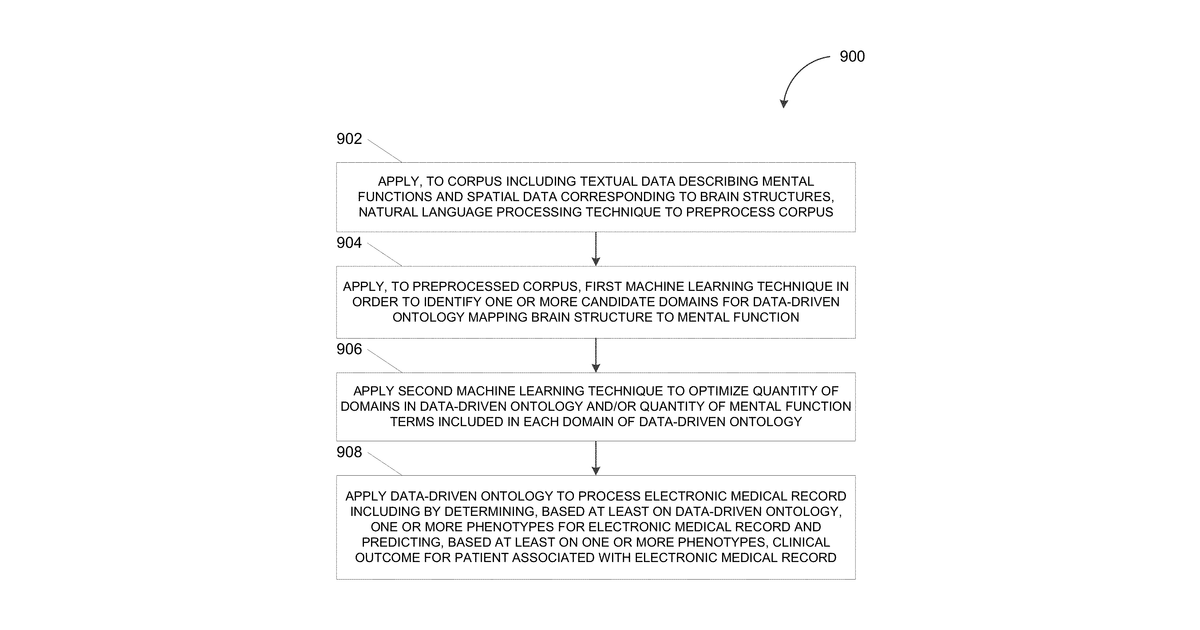
This invention uses machine learning to create a structured map, called an ontology, that links specific brain areas to various mental functions. It works by analyzing large amounts of text describing mental functions and spatial data about brain structures. One machine learning step identifies initial connections, and another refines the map by optimizing the number of categories and terms within them. This map can then be used to analyze a patient's electronic medical records and predict their health outcomes. The claims specify that the first machine learning step can be an unsupervised technique like k-means clustering, looking for co-occurrences between brain structures and mental function terms.
Why it matters: Filed in 2020, this invention predates the widespread adoption and advanced capabilities of large language models (LLMs) and sophisticated natural language processing (NLP) techniques. Modern AI could significantly enhance the accuracy and efficiency of generating and optimizing the brain structure-to-mental function ontology by better understanding textual descriptions and identifying complex relationships in the data.
AI gives you a few directions you could take this. Pick one, and we check whether your version is different enough to patent, then write the filing.
Reinvent this with AI


