
Turn abandoned patents
into your own filing
into your own filing
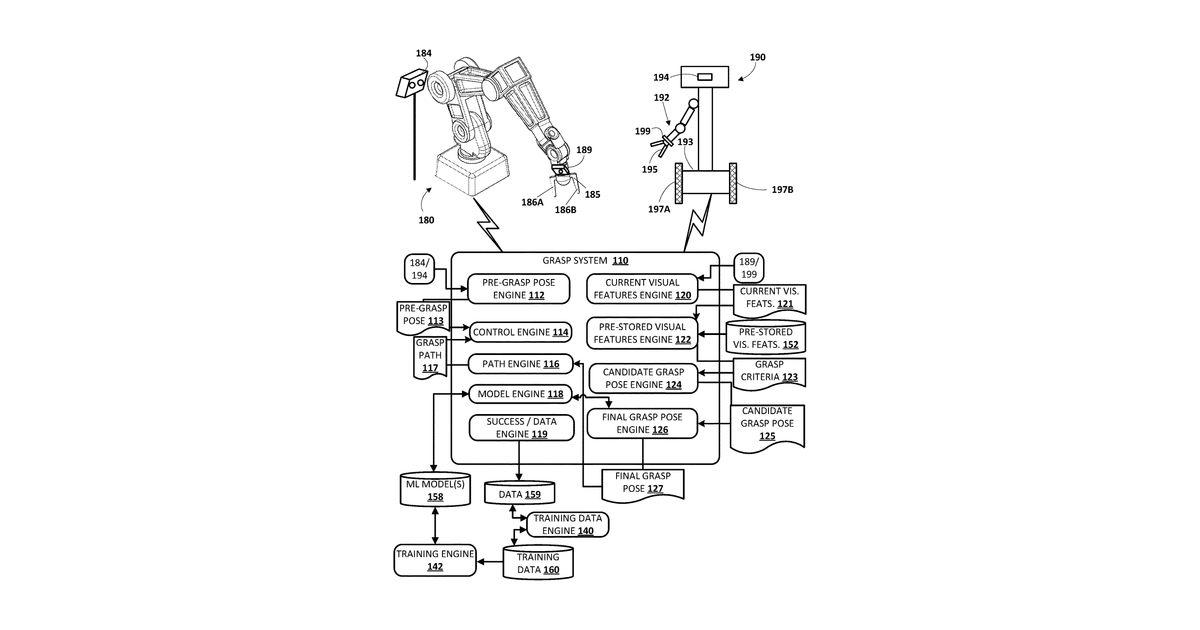
A robot uses a two-step vision process to precisely grasp an object. First, it uses an initial camera to get a rough idea of where the object is and moves its gripper to a "pre-grasp" position nearby. Then, a camera on the gripper itself takes a closer look, comparing what it sees to a library of known visual features and their associated grasping instructions to determine the exact final position for the gripper. The claims narrow this to a specific method where the final grasp pose strictly conforms to a candidate pose derived from this second vision step.
Why it matters: Filed before the widespread adoption of highly efficient, real-time AI vision models for robotic manipulation. Modern deep learning techniques can now more robustly and quickly perform the feature matching and pose determination described, making the system more practical.
AI gives you a few directions you could take this. Pick one, and we check whether your version is different enough to patent, then write the filing.
Reinvent this with AI


