
Turn abandoned patents
into your own filing
into your own filing
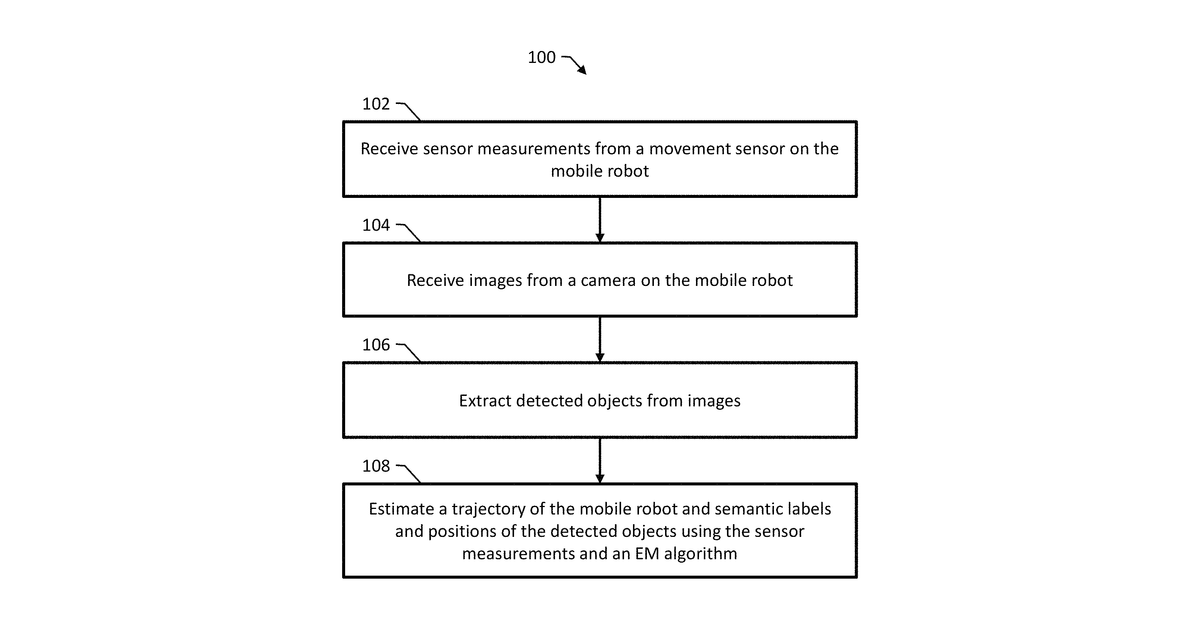
This invention describes a mobile robot that can figure out its own location and build a map of its surroundings at the same time. It does this by using data from its movement sensors and pictures taken by its camera. For each picture, it identifies various objects. Then, it uses a specific mathematical technique called an Expectation-Maximization (EM) algorithm to simultaneously calculate the robot's path and determine the type and exact position of each detected object in the environment. The claims specifically focus on this EM algorithm approach.
Why it matters: Since 2019, significant advancements in deep learning-based object detection models have made the initial object extraction step far more accurate and efficient. This improvement simplifies the data input for the EM algorithm, potentially making the overall SLAM system more robust and easier to implement on mobile robot hardware now.
AI gives you a few directions you could take this. Pick one, and we check whether your version is different enough to patent, then write the filing.
Reinvent this with AI


