
Turn abandoned patents
into your own filing
into your own filing
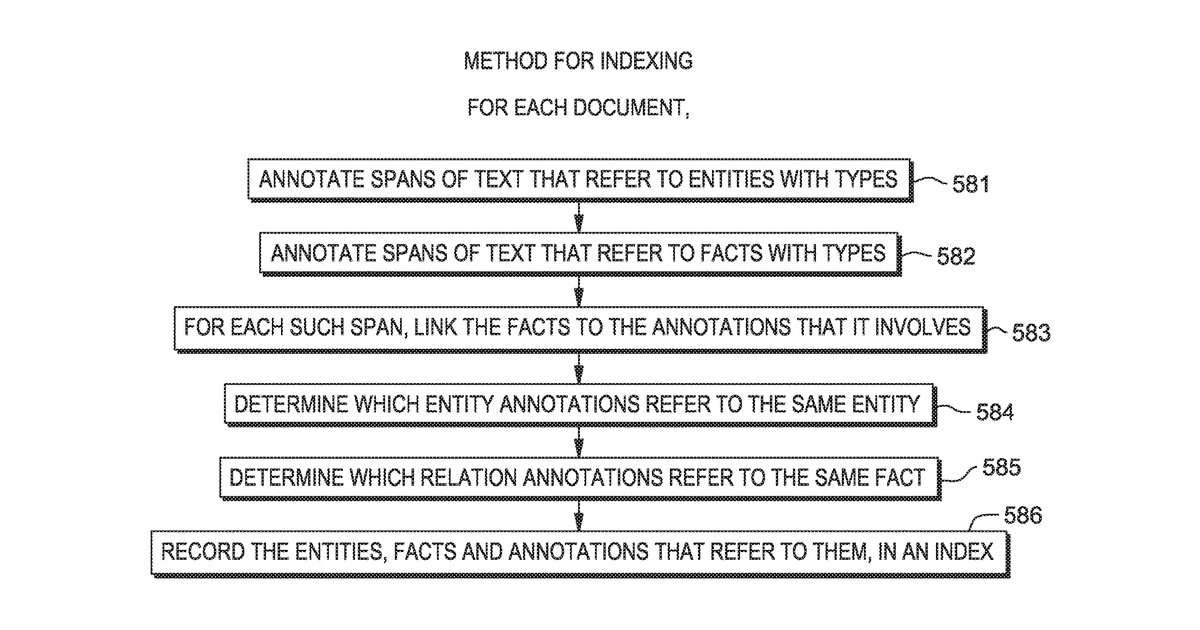
This invention describes a computer system that answers questions by looking for logical proofs within a collection of documents. When a question is asked, the system proposes several possible answers. For each answer, it tries to find a series of facts, or 'premises,' that together form a logical argument supporting that answer. It then searches for documents that contain all these supporting facts, scores the answer based on these documents, and ranks the answers from best to worst. The core method involves indexing documents by annotating text spans that refer to entities and facts, and iteratively recognizing premises, even those not explicitly stated in the initial document set.
Why it matters: Filed before the widespread adoption and advanced capabilities of Large Language Models (LLMs). The method's focus on identifying premises and constructing proofs from multiple documents to validate answers aligns perfectly with current LLM-driven retrieval-augmented generation (RAG) systems, which can now perform these steps with greater sophistication and scale.
AI gives you a few directions you could take this. Pick one, and we check whether your version is different enough to patent, then write the filing.
Reinvent this with AI


