
Turn abandoned patents
into your own filing
into your own filing
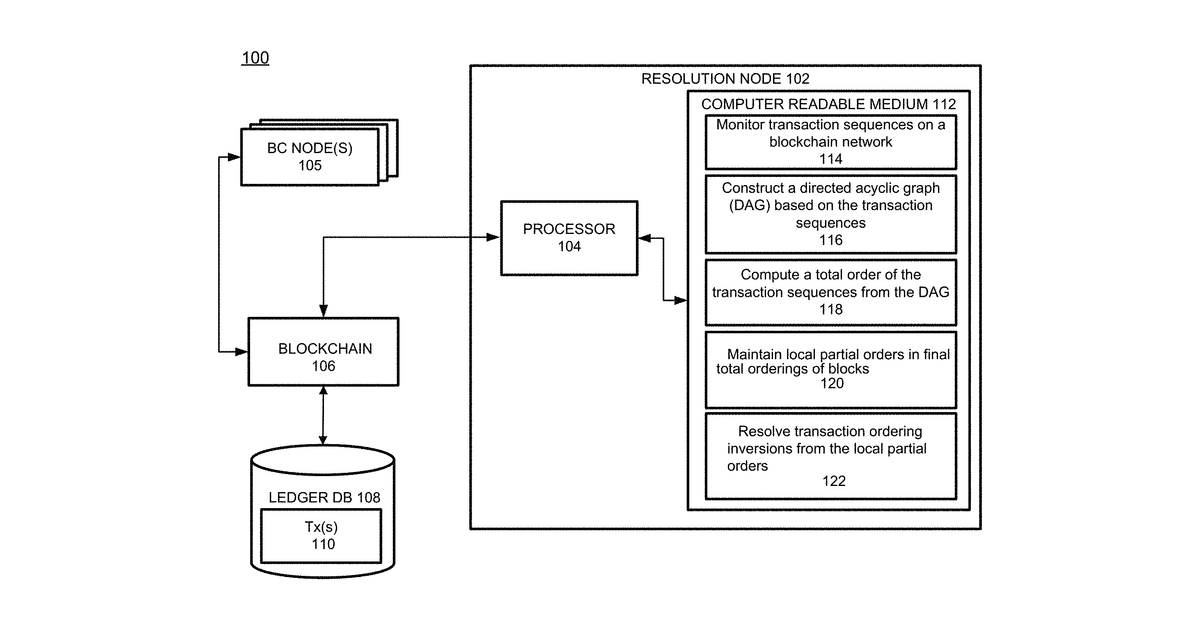
This invention describes a system for ensuring transactions on a blockchain are put in a clear, final order. It works by watching transactions, building a map (a directed acyclic graph) of how they relate, and then using that map to figure out the definitive sequence. Specifically, if two blocks appear to have happened at the same time, the system resolves this conflict by checking which one was actually created first and placing that one earlier in the final order.
Why it matters: Since 2019, blockchain networks have become significantly more complex and handle higher transaction volumes, intensifying the need for robust and fair transaction ordering. The problem of Maximal Extractable Value (MEV) and ensuring predictable transaction finality has also gained prominence, making precise ordering resolution, like this invention's DAG-based approach with specific tie-breaking rules, more critical for network integrity and user trust.
AI gives you a few directions you could take this. Pick one, and we check whether your version is different enough to patent, then write the filing.
Reinvent this with AI


