
Turn abandoned patents
into your own filing
into your own filing
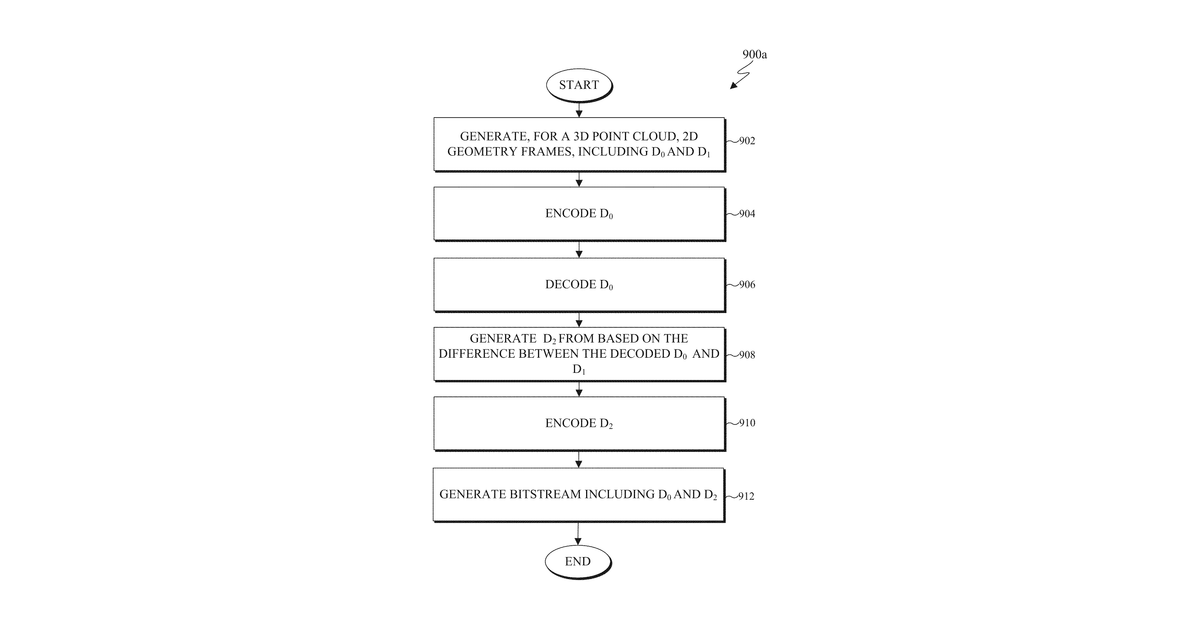
This invention describes a method for compressing 3D point cloud data, which represents objects as collections of points in space. It works by creating two digital "frames" of the point cloud at different depths, each made of small groups of points called patches. The first frame is fully encoded, and then the differences between the second frame and the *decoded* first frame are calculated and encoded separately. Both encoded parts are then combined into a compact data stream for transmission. The claims specify this process for an encoding device where the frames are related by a predefined surface thickness.
Why it matters: Filed before neural networks became prevalent for optimizing 3D data representations and compression. Modern machine learning could significantly enhance the generation of depth frames and the efficiency of encoding the differences, making this approach more performant for today's demanding real-time 3D applications like VR/AR.
AI gives you a few directions you could take this. Pick one, and we check whether your version is different enough to patent, then write the filing.
Reinvent this with AI


