
Turn abandoned patents
into your own filing
into your own filing
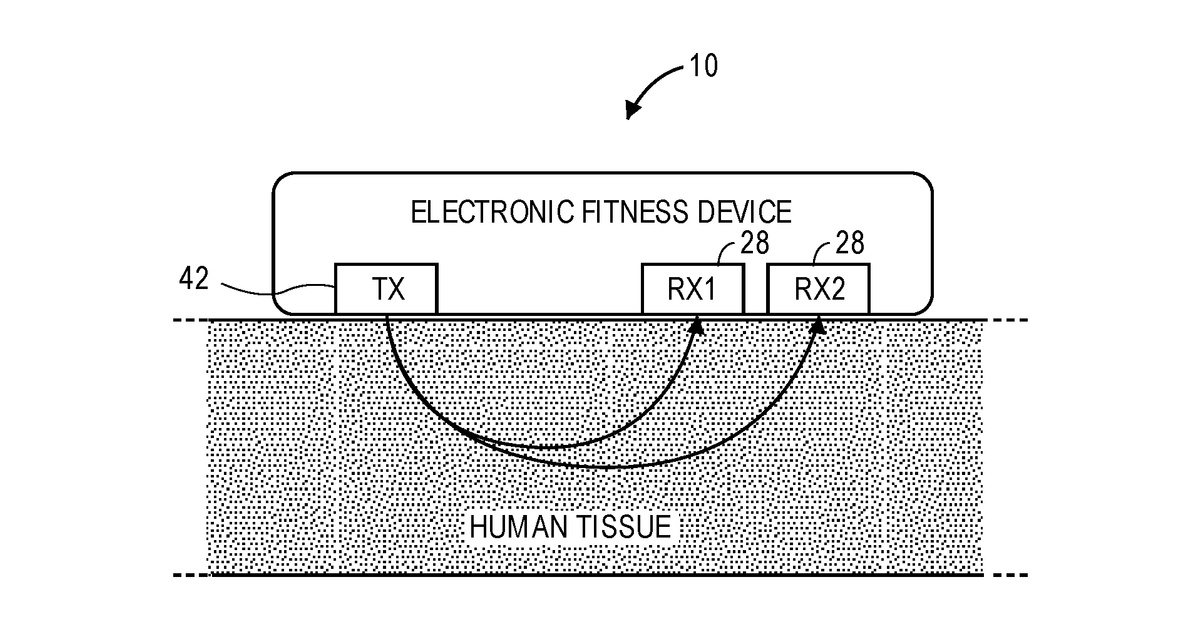
This electronic fitness device uses different colored lights and two light sensors to measure a user's heart information. It shines light onto the skin from an opening on its bottom surface, detects the reflected light with the sensors, and then a processing element analyzes these signals to determine cardiac data, including potentially pulse oximetry. The design also suggests specific light path distances between the emitters and receivers.
Why it matters: Filed before advanced low-power processors and machine learning algorithms for robust PPG analysis were widely available. These advancements now make accurate, power-efficient implementation more feasible.
AI gives you a few directions you could take this. Pick one, and we check whether your version is different enough to patent, then write the filing.
Reinvent this with AI


