
Turn abandoned patents
into your own filing
into your own filing
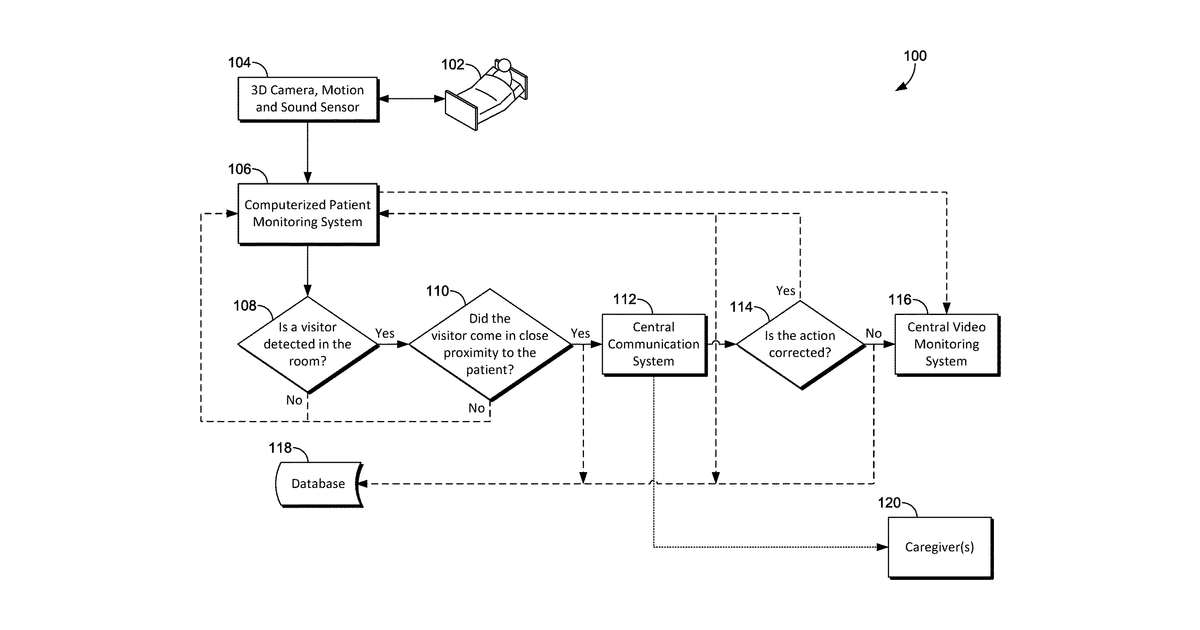
The system uses special 3D cameras to watch a patient's room. It identifies people by their facial features and checks if they are on an approved visitor list. If an unknown person is detected or someone gets too close to the patient, an alert is sent to caregivers through a central system.
Why it matters: Since 2019, AI-powered facial recognition and 3D depth sensing have dramatically improved in accuracy and accessibility. This makes the real-time comparison and identification described in the claims more robust and less resource-intensive.
AI gives you a few directions you could take this. Pick one, and we check whether your version is different enough to patent, then write the filing.
Reinvent this with AI


