
Turn abandoned patents
into your own filing
into your own filing
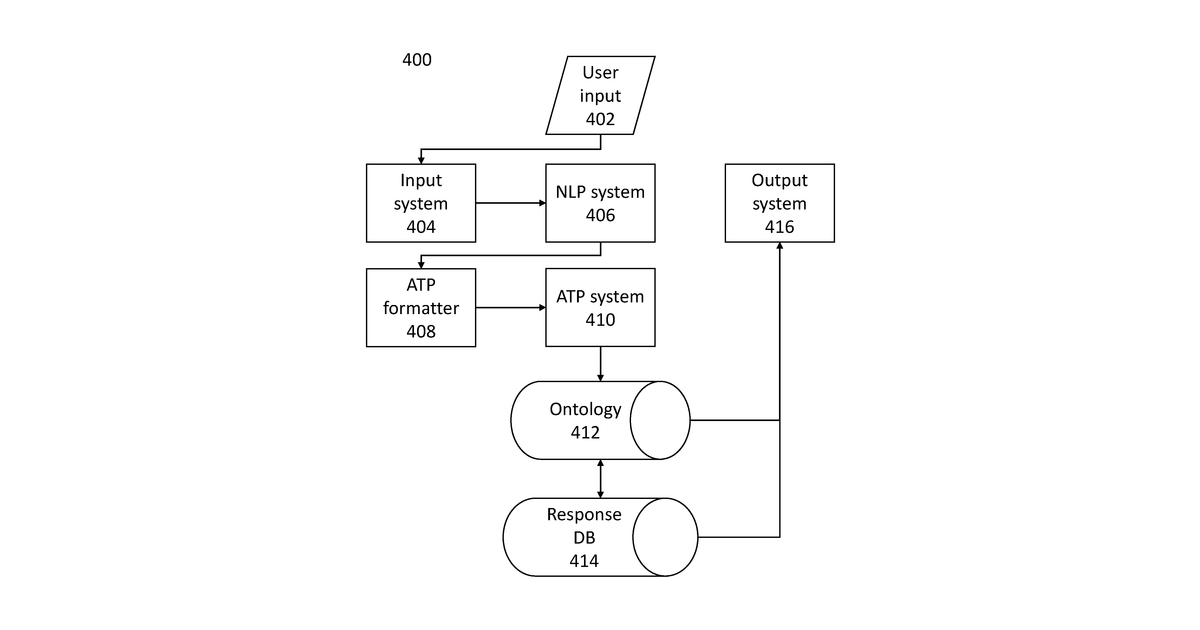
This invention describes a system that understands what people say or type and then responds intelligently. It works by taking natural language, like sentences, and breaking them down into a structured format, specifically a tree. This tree is then translated into a set of logical rules, which are fed into a special AI system called an automated theorem prover to build a knowledge map, or ontology, allowing the system to comprehend questions and generate answers. The claims specifically focus on processing text data, parsing it into an NLP tree, and then identifying verbs, subjects, and predicates to create these logical rules.
Why it matters: Filed before large language models (LLMs) could perform advanced semantic parsing and logical representation generation. Modern LLMs could significantly enhance the translation of natural language into the first-order logic axioms required by the automated theorem prover, making the initial data ingestion and structuring far more robust than in 2019.
AI gives you a few directions you could take this. Pick one, and we check whether your version is different enough to patent, then write the filing.
Reinvent this with AI


