
Turn abandoned patents
into your own filing
into your own filing
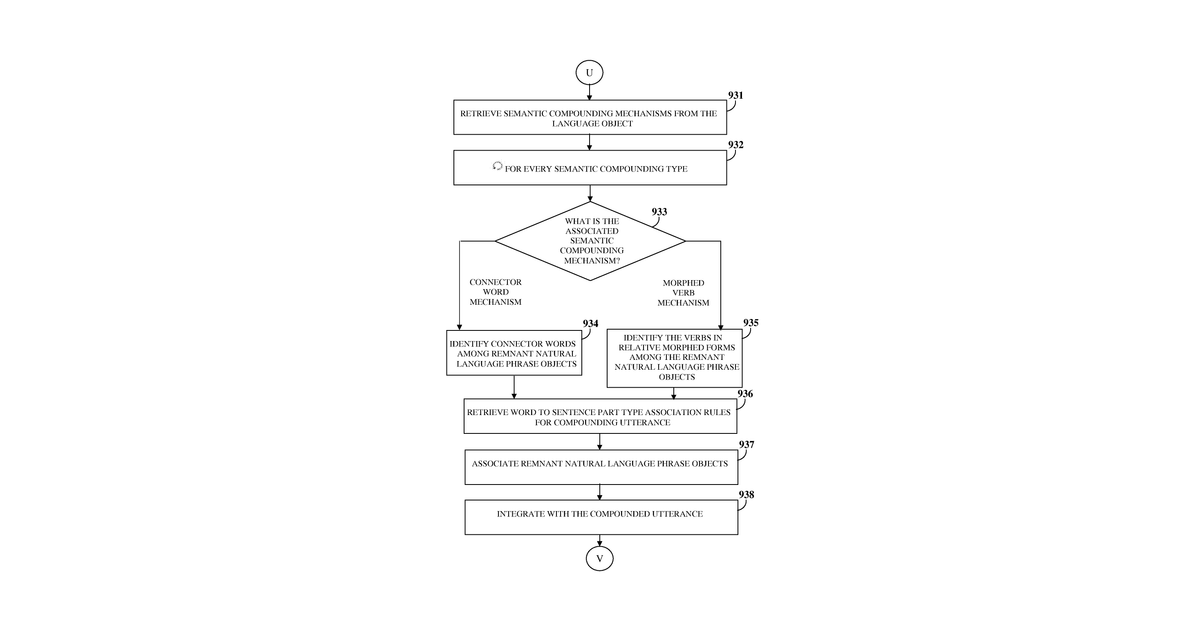
This invention describes a computer system that analyzes written text to understand its meaning and build knowledge. It breaks down sentences into words, identifies their types and features, and then groups these into meaningful phrases, consolidating them to extract specific semantic items and their relationships. The claims narrow the system's "discourse context" and "system knowledge" to be simple templates for storing data at multiple levels, including semantic items and a map for resolving references.
Why it matters: Filed before the widespread adoption of large language models, this invention's core tasks of semantic analysis, discourse representation, and zero-base knowledge building can now be significantly automated and enhanced by modern AI. The structured templates for discourse context and system knowledge, which likely required extensive manual rule-setting in 2015, could now be dynamically populated or leveraged by LLMs for more robust and scalable knowledge acquisition.
AI gives you a few directions you could take this. Pick one, and we check whether your version is different enough to patent, then write the filing.
Reinvent this with AI


