
Turn abandoned patents
into your own filing
into your own filing
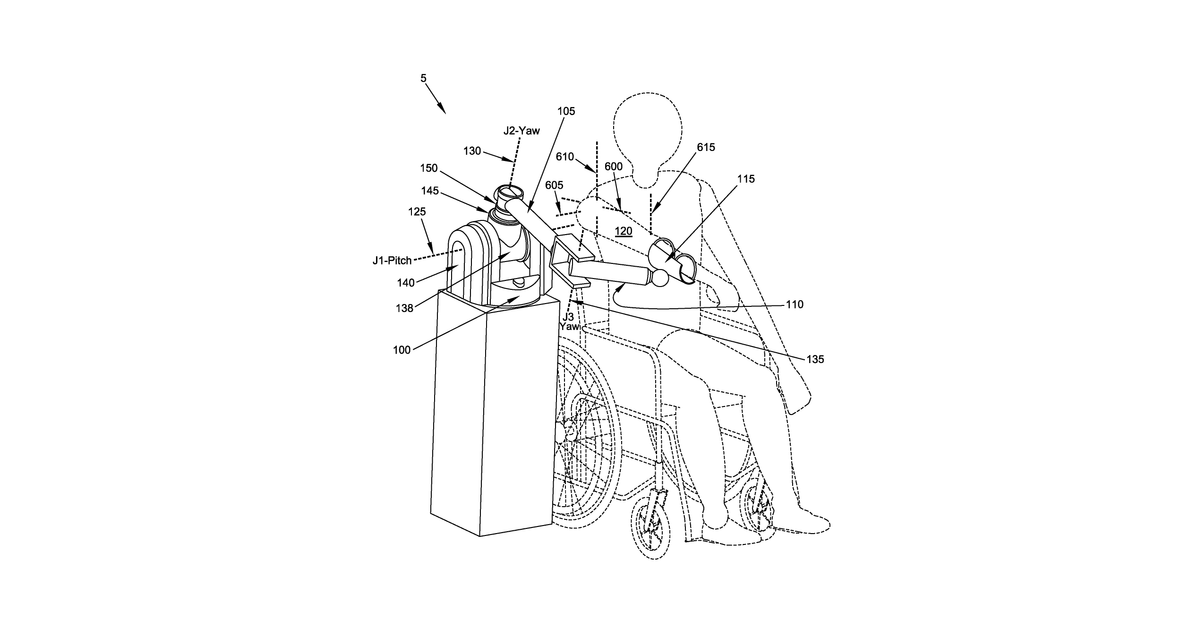
This invention describes a robot designed for rehabilitation, working alongside a person's arm or leg. It features a base and a robotic arm with at least two independent movements, configured so its tip moves in the same way as the person's limb tip, helping them exercise. The claims specifically narrow this to a version where the robot's two main movements are mechanically linked by a special cabled differential system.
Why it matters: Since 2014, advancements in sensor technology, real-time control systems, and AI for movement prediction have made precise, adaptive human-robot interaction more feasible. These improvements could enable a more accurate and responsive device for mimicking human limb movements, potentially reducing the complexity or cost of the control system compared to a decade ago.
AI gives you a few directions you could take this. Pick one, and we check whether your version is different enough to patent, then write the filing.
Reinvent this with AI


