
Turn abandoned patents
into your own filing
into your own filing
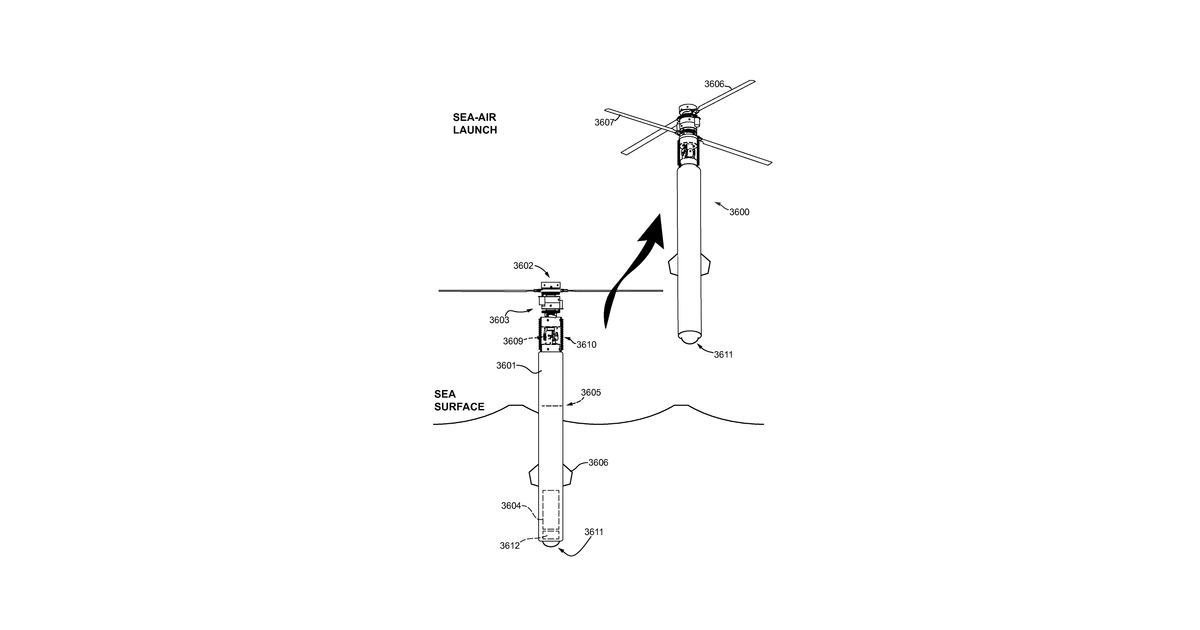
This invention describes an unmanned aerial vehicle (UAV) designed for various operations like surveillance or payload delivery. It features a long, tubular body with a low center of gravity and a gimbaled neck connecting to the rotor head. The claims specify a unique dual-rotor system where two stacked rotors are powered by a single electrical signal, with voltage adjustments allowing independent speed control for each. Additionally, the design includes watertight components enabling the UAV to float vertically for water takeoffs and landings.
Why it matters: Filed before significant advancements in miniaturized flight controllers, battery energy density, and AI-driven swarm intelligence. The ability to precisely control multiple drones in coordinated arrays, especially with complex rotor dynamics and amphibious capabilities, is far more achievable and cost-effective now.
AI gives you a few directions you could take this. Pick one, and we check whether your version is different enough to patent, then write the filing.
Reinvent this with AI


